

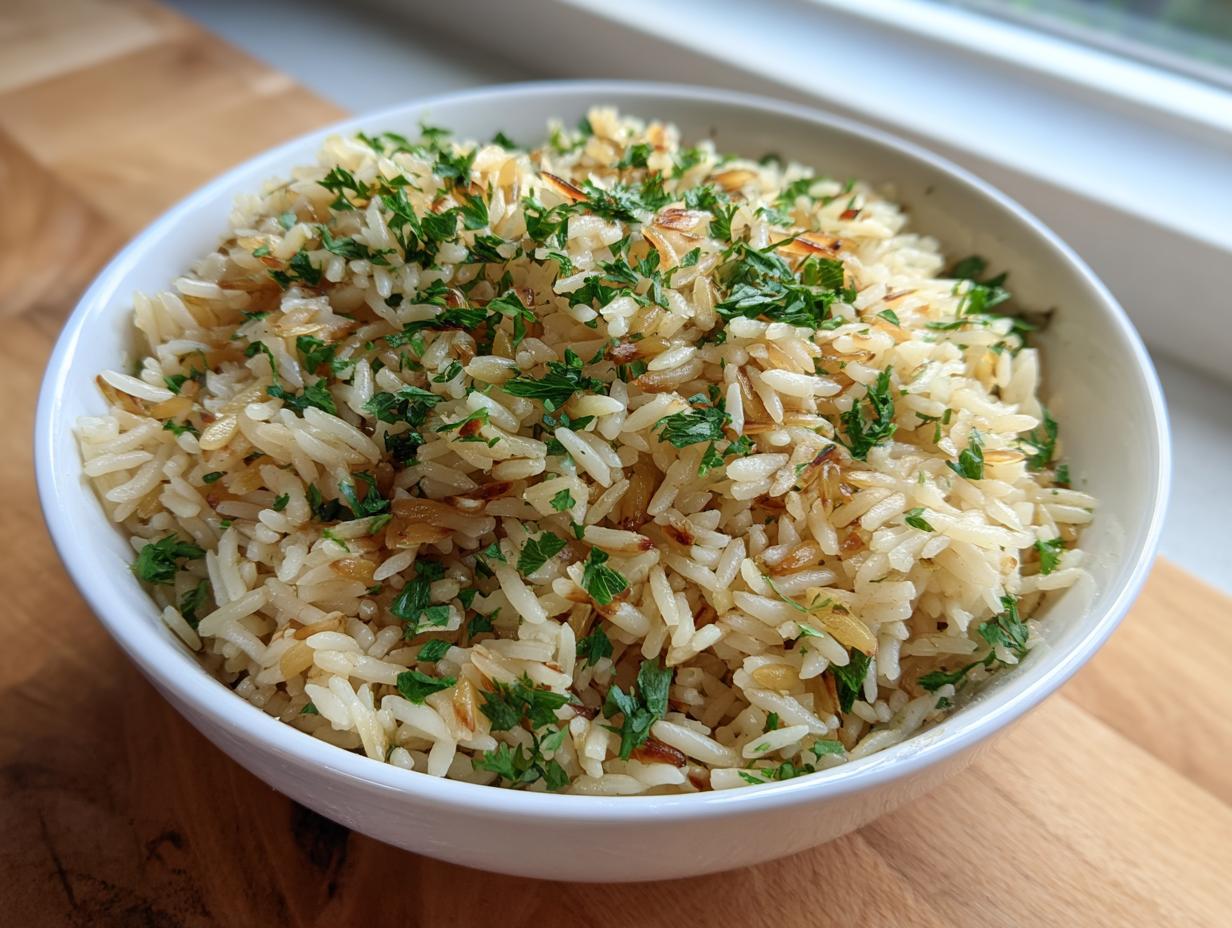
The 5 PM question—”What’s for dinner?”—is usually followed by a sigh of defeat when we think about side dishes. Are we settling for plain white rice or, worse, ripping open a cardboard box? Not on my watch! I’m Ava Sinclair, and here at Cheffinity, we believe real, satisfying food should be fast. That’s why I perfected this recipe: The Ultimate Fluffy Homemade Rice Pilaf with Toasted Orzo. Forget the boxed stuff; this savory side is better, faster, and genuinely delicious. By focusing on smart technique rather than complicated steps, we deliver that restaurant-style fluffiness you crave on a busy weeknight. Stick with me, and we’ll conquer the side dish dilemma together!
- Why This Easy Homemade Rice Pilaf Recipe Works Every Time
- Ingredients for the Ultimate Fluffy Rice Pilaf with Orzo
- How To Make Perfect Rice Pilaf: Step-by-Step Instructions
- Serving Suggestions for Your Rice Pilaf for Chicken Dinner
- Tips for Quick Rice Side Dish Prep and Storage
- Variations on Classic Rice Pilaf Technique
- Frequently Asked Questions About Your Rice Pilaf
- Estimated Nutritional Information for this Savory Rice Side Dish
- Share Your Fluffy Rice Pilaf Success
Why This Easy Homemade Rice Pilaf Recipe Works Every Time
If you’ve ever opened a box promising perfect rice pilaf and ended up with a mushy mess, I get it. That’s why this **Fluffy Rice Pilaf Recipe** is built differently. We aren’t relying on powdery stabilizers. We are using old-school technique to create a genuinely savory rice side dish that stands up perfectly next to chicken or pork.
- It beats those boxed mixes every single time—no weird dehydrated veggies, just real flavor!
- We use both butter and oil to create the perfect fat base for toasting, which keeps grains separate.
- The mandatory resting step guarantees you get fluffy, distinct grains, not a sticky clump.
The Secret to Restaurant Style Rice Pilaf Texture
Listen, texture is everything when you’re aiming for that **Classic Rice Pilaf Technique**. The first rule? You absolutely have to rinse your rice. I mean truly rinse it until the water runs totally clear. My mom taught me that removing that surface starch is non-negotiable unless you want gummy rice.
Then comes the *toasting*. By browning the orzo first, then coating the rinsed rice grains in that flavorful fat—butter, oil, onion—we seal the outside. It sounds simple, but that quick little sauté before the liquid goes in is what locks in the structure. I remember making this for the first time and realizing, “Wow, this is how chefs do it!” No more guesswork!
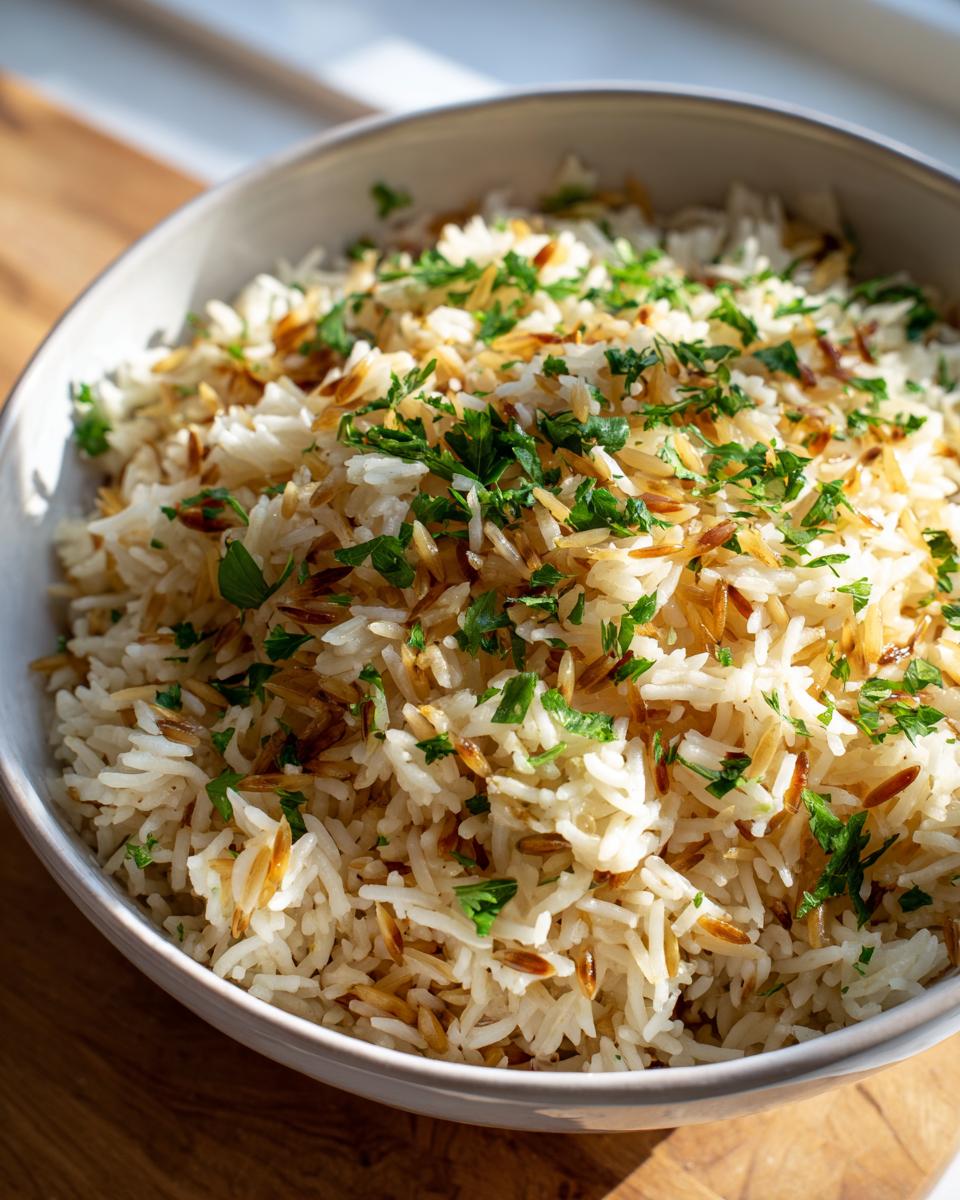
Ingredients for the Ultimate Fluffy Rice Pilaf with Orzo
Getting the right ingredients is half the battle won, especially when you’re aiming for that perfect savory side. Believe me, the quality of your broth really matters for this **rice pilaf**; it’s where most of your flavor comes from! We keep things simple here, focusing on quality components that build layers of taste.
- 1 tablespoon olive oil
- 1 tablespoon unsalted butter
- 1/2 cup orzo pasta
- 1 small yellow onion, finely chopped
- 2 cloves garlic, minced
- 1 1/2 cups long-grain white rice (like Basmati or Jasmine), rinsed until water runs clear
- 2 1/2 cups low-sodium chicken broth (or vegetable broth for vegetarian option)
- 1/2 teaspoon salt
- 1/4 teaspoon black pepper
- 2 tablespoons fresh parsley, chopped (for garnish)
Ingredient Notes and Substitutions for Your Rice Pilaf
I almost always grab Basmati or Jasmine rice here because their long grains separate the best, which is what we need for fluffiness. If you happen to be making this for someone vegetarian, swapping the chicken broth for a high-quality vegetable broth gives you a great **Vegetarian Rice Pilaf Idea** without losing any depth. Don’t skip rinsing the rice, though—that step is crucial for texture!
How To Make Perfect Rice Pilaf: Step-by-Step Instructions
Now we get to the action! If you follow these steps precisely, I promise you’ll master **How To Make Perfect Rice Pilaf**. This isn’t hard science, but timing certain steps makes all the difference between fluffy perfection and sad, sticky rice. We’re building flavor right in the pot, so pay attention to those initial toasting phases before anything even boils!
Toasting the Orzo and Aromatics for Deep Rice Pilaf Flavor
First things first: get your fat hot over medium heat. Toss in that lovely 1/2 cup of orzo. You need to stir it constantly until it turns a beautiful, deep golden brown—kind of like a toasted marshmallow, but not burnt! That takes about three to five minutes. Once the orzo is toasted, throw in your chopped onion and let it soften for about four minutes.
Next, add the minced garlic. Garlic burns fast, so give it just one quick minute until you can really smell it—that’s your cue! Now, add that rinsed rice and stir everything together for two full minutes. You’re lightly toasting the rice grains in the fat, which helps them keep their shape later. I found that shaking the pan while stirring here keeps things moving evenly across the bottom!
The Simmer and Rest Technique for Fluffy Rice Pilaf
Time for the liquid! Pour in your broth, salt, and pepper, and bring that mixture right up to a roaring boil. As soon as it’s boiling hard, this is crucial: turn the heat down to the absolute lowest setting you have and snap that lid on tight. I mean *tight*. You cannot lift that lid for 15 minutes. Seriously, walk away! This steams the rice perfectly.
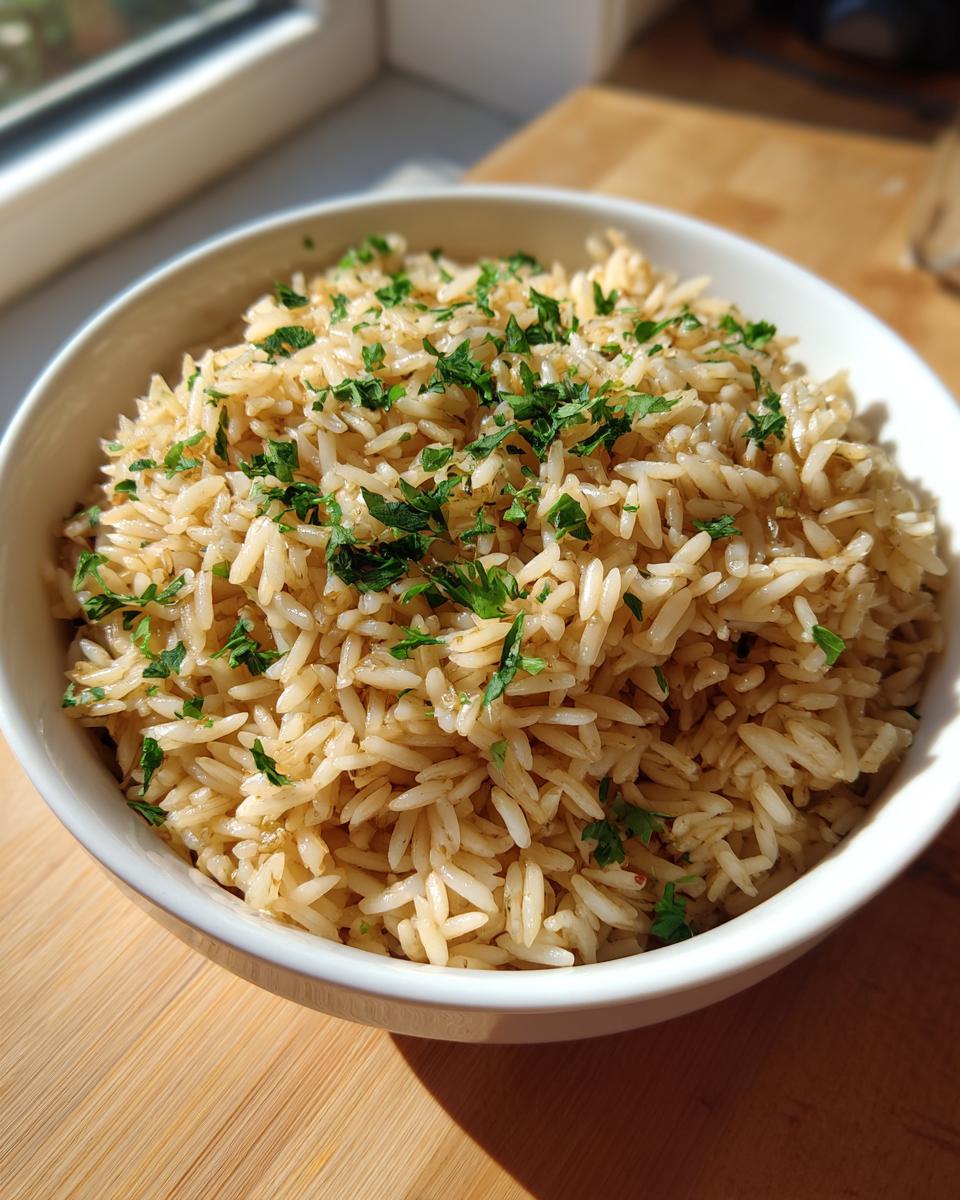
Once the 15 minutes are up, turn the heat off completely, but here is the non-negotiable secret for your **rice pilaf**: leave the lid on for 10 more minutes. That residual steam finishes the cooking process and sets the structure, which gives you that beautiful fluffiness. You can check out advanced techniques here, but trust me on the resting part. After that final rest, remove the lid, fluff it gently with a fork (maybe add some potatoes on the side!), and sprinkle with parsley. Done!
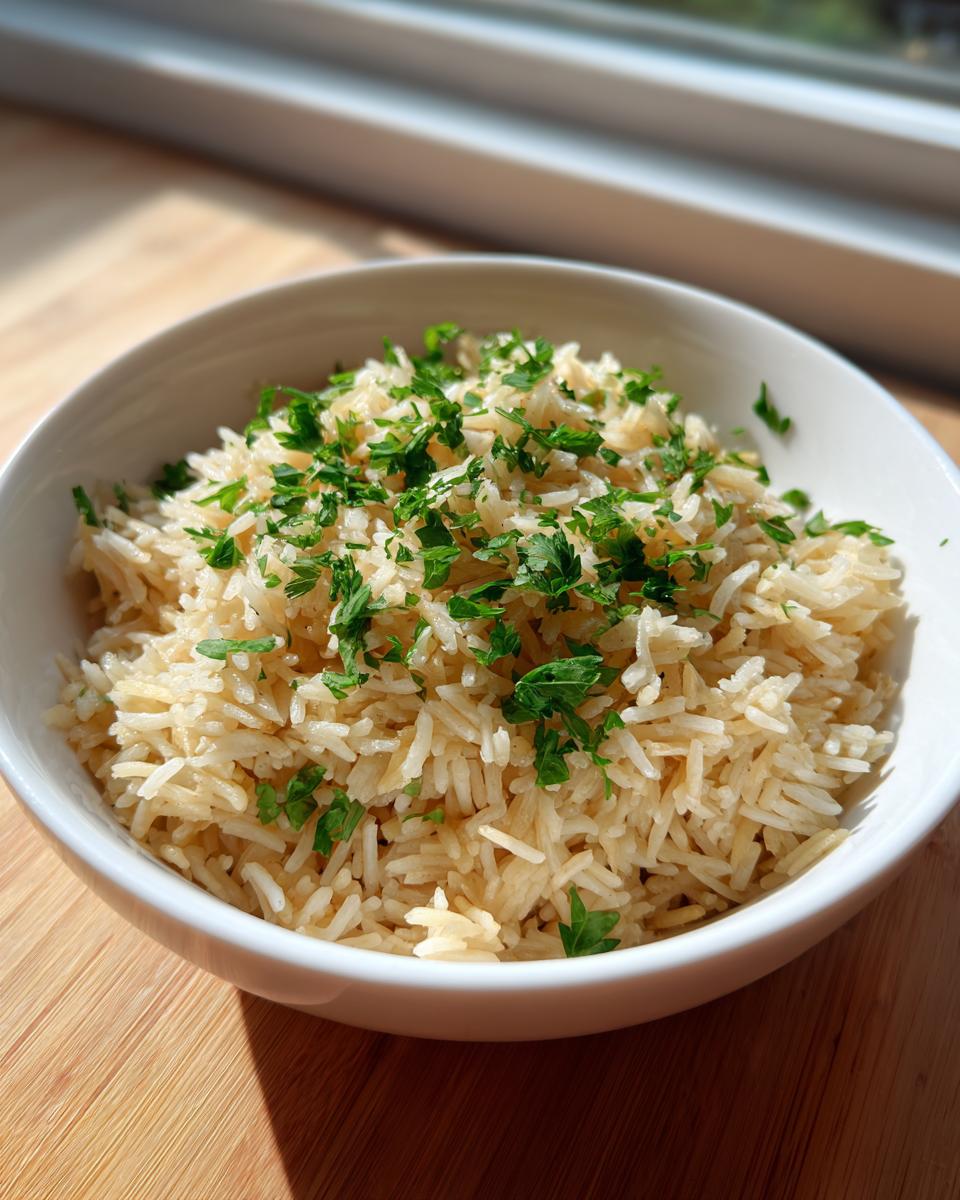
Serving Suggestions for Your Rice Pilaf for Chicken Dinner
One reason I love this **rice pilaf** so much is how versatile it is! It’s a universally loved **Savory Rice Side Dish**. Of course, it’s the absolute best side dish for chicken—try it next to my recipe for Juicy Baked Chicken Breasts; the broth in the pilaf soaks up all those lovely pan juices!
But don’t stop there! This pilaf is robust enough to handle heavier mains too. It works beautifully alongside roasted pork chops, especially if you’re making my easy Sweet Soy Pork Steaks. Honestly, if you need a comforting **Rice Pilaf for Chicken Dinner**, this recipe is your ticket to an easy, satisfying, and complete meal.
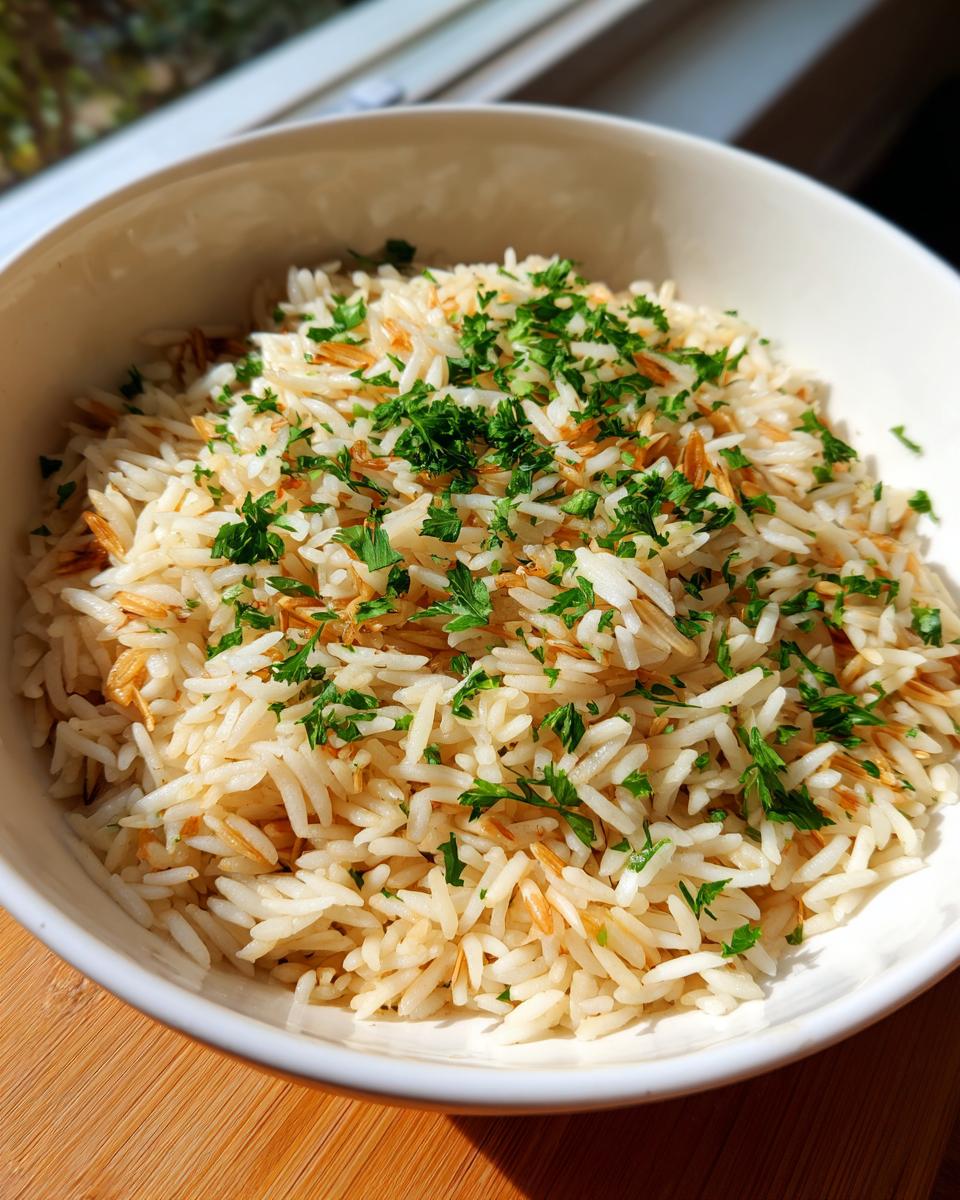
Tips for Quick Rice Side Dish Prep and Storage
I know what it’s like when you’re staring down a long work week and you need easy anchors for dinner. That’s why this **rice pilaf** is perfect for making ahead! You can absolutely prepare this dish completely and store it. It truly becomes a fantastic **Make Ahead Rice Side**.
Once it’s cooled down, I keep leftovers stored in an airtight container in the fridge for up to four days. When you’re ready to eat it again, don’t just microwave it dry! That will ruin the fluffiness we worked so hard to achieve. Instead, add a tablespoon of water or broth for every cup of rice you are reheating and cover it with a damp paper towel. Pop it in the microwave in short bursts until it’s heated through. It revives beautifully! If you’re planning ahead, you can even prep your onions and garlic during your Sunday prep session. Check out my ideas for other quick meal components!
Variations on Classic Rice Pilaf Technique
While this basic recipe is glorious on its own—especially with that lovely toasted **rice pilaf with orzo**—sometimes you just need a little twist, right? We all love keeping things interesting, especially for leftovers or when we have company coming over unexpectedly.
For texture, try adding about a quarter cup of toasted slivered almonds or pine nuts right at the end when you fluff everything with the fork. They add such a satisfying little crunch against the soft grains!
If you want something sweeter, a handful of dried cranberries or golden raisins—soaked briefly in hot water first so they don’t steal moisture from the rice—works wonderfully. If you’re sticking to the vegetarian option, you can give it an earthy depth by sautéing some chopped mushrooms with the onions!
For flavor exploration, you can always pivot toward international methods; for instance, recipes like the Lebanese Rice Pilaf use vermicelli instead of orzo and different spices entirely. But for weeknight ease, just stick to those simple mix-ins. I love knowing we can pivot easily to something new using this foundation. If you ever want a totally different flavor profile, check out my recipe for Black Beans and Rice!
Frequently Asked Questions About Your Rice Pilaf
I know you’ll have questions when you try a new recipe, especially when you’re moving away from a box mix! These are the things I get asked most often when people first try my **rice pilaf** method. Don’t worry if you mess up the first time; we’ll troubleshoot!
Can I use Basmati rice instead of long-grain white rice for this rice pilaf?
Oh, absolutely! Basmati is actually my personal favorite for this dish because it tends to have a naturally longer, fluffier grain when cooked correctly. Since Basmati can sometimes absorb liquid a little differently than standard long-grain white rice, you might need to check it after the 15-minute simmer. If it looks like it needs just a tiny bit more liquid to cook through, add a mere splash of hot broth before you seal it up for the final rest. But yes, Basmati is a fantastic swap!
How do I make this a healthier rice pilaf alternative?
That’s a great question, especially if you’re looking for a **healthier rice pilaf alternative** for everyday meals. The easiest swap is ensuring you use the vegetable broth instead of chicken broth, which we mentioned in the notes. If you really want to step it up, try swapping half of your white rice with brown rice. Just remember, brown rice takes longer to cook, so you’ll need to add about 10-15 extra minutes of simmer time, and you might need an extra quarter cup of liquid.
Why did my rice pilaf turn out sticky instead of fluffy?
If you ended up with a gummy lump instead of that beautiful, separated texture, 99% of the time it comes down to two things we stress in the recipe: Did you rinse your rice until the water ran clear? That starch is the enemy of fluffiness! The second, and most common mistake, is interfering during the cook time. You must resist the urge to lift the lid during the 15-minute simmer AND you have to let it rest for the full 10 minutes off the heat. That rest period is when the steam balances out, setting the grain perfectly. Don’t skip it!
Estimated Nutritional Information for this Savory Rice Side Dish
I know, I always tell folks that meal planning and nutrition tracking shouldn’t stop just because you’re making a side dish; that’s part of feeding your family well! Now, please remember that since we’re making this **savory rice side dish** from scratch with real ingredients, these numbers are just an estimate based on the ingredients list. They can change based on your broth sodium or added oils.
- Serving Size: 3/4 cup cooked
- Calories: 280
- Fat: 6g
- Carbohydrates: 50g
- Protein: 7g
- Sodium: 350mg (This shows why using low-sodium broth is smart!)
Share Your Fluffy Rice Pilaf Success
Well, that’s it! You’ve officially mastered the **rice pilaf** technique and proven you don’t need a box for deliciousness. I truly hope this easy side dish makes your weeknights a little brighter. Now, I’d love to hear from you!
Did this recipe finally get you that fluffy texture you’ve been chasing? Drop a rating below—even one star helps me know what tweaks readers might need! And please, if you snapped a picture of your beautiful savory side, share it with me. You can always send questions or praise (I’ll take both!) through my contact page. Happy cooking!
PrintThe Ultimate Fluffy Homemade Rice Pilaf with Toasted Orzo

Make restaurant-style rice pilaf at home using this easy technique. This savory side dish features toasted orzo and chicken broth for perfect, fluffy grains every time. It is a quick rice side dish perfect for weeknight dinners.
- Prep Time: 10 min
- Cook Time: 25 min
- Total Time: 35 min
- Yield: 4 servings 1x
- Category: Side Dish
- Method: Stovetop
- Cuisine: American
- Diet: Vegetarian
Ingredients
- 1 tablespoon olive oil
- 1 tablespoon unsalted butter
- 1/2 cup orzo pasta
- 1 small yellow onion, finely chopped
- 2 cloves garlic, minced
- 1 1/2 cups long-grain white rice (like Basmati or Jasmine), rinsed until water runs clear
- 2 1/2 cups low-sodium chicken broth (or vegetable broth for vegetarian option)
- 1/2 teaspoon salt
- 1/4 teaspoon black pepper
- 2 tablespoons fresh parsley, chopped (for garnish)
Instructions
- Heat the olive oil and butter in a medium saucepan over medium heat.
- Add the orzo pasta to the pan. Toast the orzo, stirring frequently, until it turns golden brown, about 3 to 5 minutes. Watch carefully to prevent burning.
- Add the chopped onion to the pan with the toasted orzo. Cook until the onion softens, about 4 minutes.
- Add the minced garlic and cook for 1 minute until fragrant.
- Add the rinsed rice to the pan. Stir constantly for 2 minutes to coat the grains in the fat and toast them lightly. This step helps achieve fluffiness.
- Pour in the chicken broth, salt, and pepper. Bring the mixture to a boil.
- Once boiling, immediately reduce the heat to the lowest setting, cover the saucepan tightly with a lid, and simmer for 15 minutes without lifting the lid. Do not stir during this time.
- Remove the saucepan from the heat. Keep the lid on and let the rice rest undisturbed for an additional 10 minutes. This resting period is key for perfect texture.
- Remove the lid. Fluff the rice pilaf gently with a fork. Stir in the fresh parsley before serving.
Notes
- Rinsing your rice thoroughly removes excess starch, which prevents the final dish from becoming sticky or gummy.
- For a vegetarian rice pilaf alternative, substitute the chicken broth with a quality vegetable broth.
- This dish pairs well as a side dish for chicken dinner or pork chops.
Nutrition
- Serving Size: 3/4 cup cooked
- Calories: 280
- Sugar: 1
- Sodium: 350
- Fat: 6
- Saturated Fat: 2
- Unsaturated Fat: 4
- Trans Fat: 0
- Carbohydrates: 50
- Fiber: 2
- Protein: 7
- Cholesterol: 5